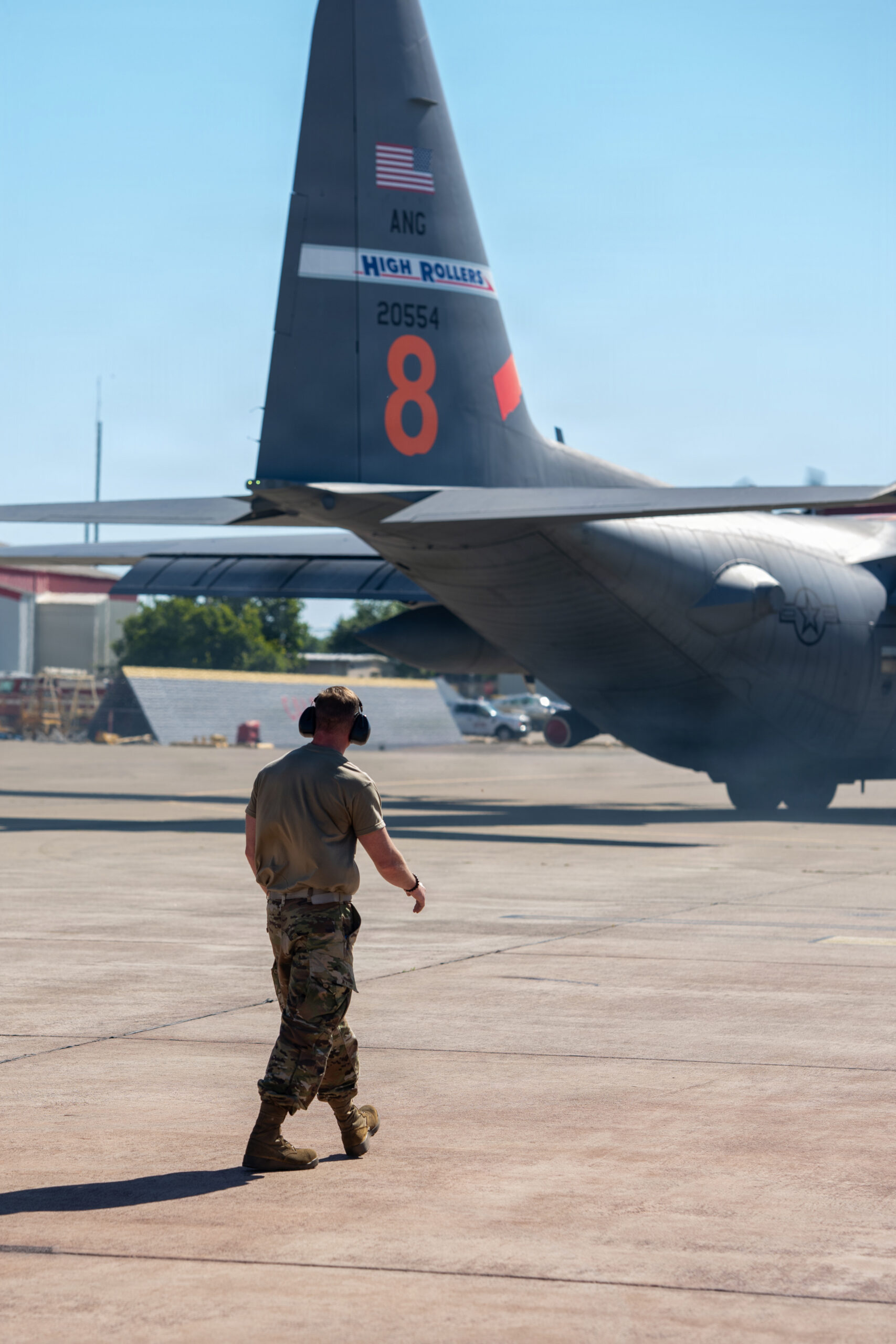
Every MAFFS mission begins long before takeoff, with maintainers ensuring aircraft are mission-ready for wildfire response.
Every MAFFS mission starts the same way, not with an aircrew brief or a dispatch call, but with a crew chief opening an aircraft in the dark.
During MAFFS spring training at McClellan Air Tanker Base, April 19-25, maintainers from the 152nd Airlift Wing worked behind the scenes to ensure C-130 aircraft were mission-capable before the first sortie of each day. Their work is the foundation that everything else (flight ops, retardant delivery, interagency coordination) depends on.
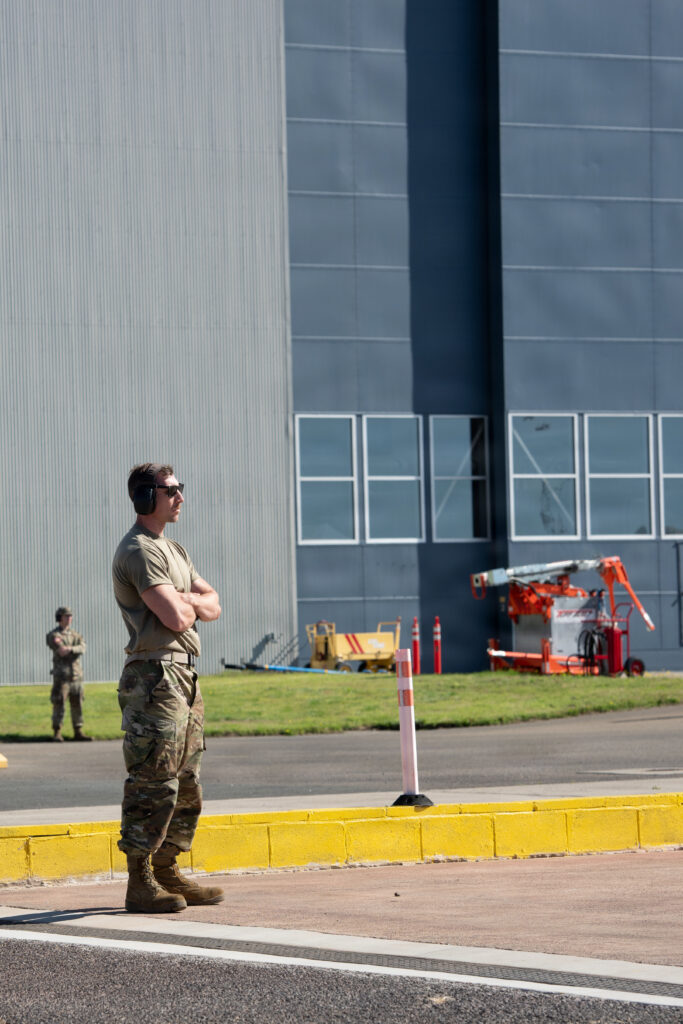
“We’ll get here early in the morning before the aircrew does, open up the aircraft, and make sure it’s ready,” Master Sgt. Chris Crossley told DVIDS reporter Airman Aaron Lopez during the exercise. Crossley, a crew chief with Nevada’s Air National Guard, has supported MAFFS operations across multiple fire seasons.
The tempo during training mirrors real-world activation. After each sortie, maintainers turn the aircraft immediately, inspecting, servicing, and configuring for the next launch. The cycle can repeat throughout 12-hour shifts. “We’re the first ones in and the last ones out,” Crossley said.
When aircraft are airborne, the maintenance team doesn’t stand down. Staff Sgt. Skyler Marsden described the continuous support role: “When they’re flying, we’re their support system. If something breaks, we troubleshoot it and determine if the aircraft can keep going.”
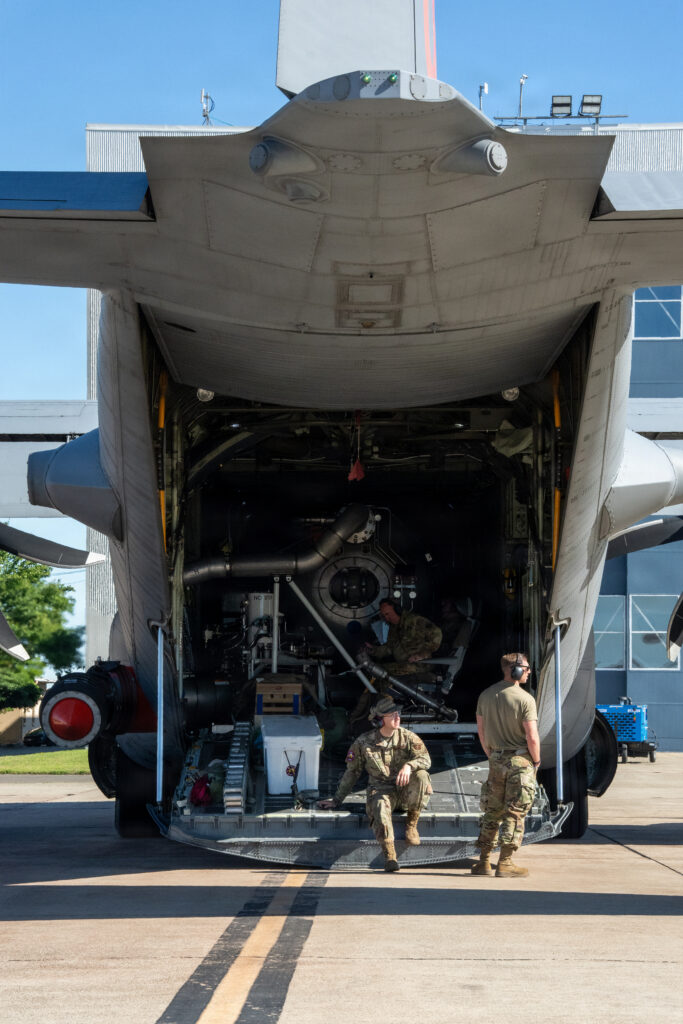
Operating at a training site with minimal personnel adds pressure. “Out here, it’s just us two and our plane,” Crossley said, noting that coordination with partners like CAL FIRE becomes critical for equipment and operational support.
The weight of the role isn’t lost on either maintainer. “If we say the plane is good, they’re going to fly it,” Marsden said. That accountability, signing off an aircraft that will fly low, slow, and heavy over active fire, defines the maintenance mission.
“It gives you a sense of purpose knowing that getting that plane off the ground can make a difference,” Crossley added.
This year’s spring training brought together units from Nevada (152nd Airlift Wing), Wyoming (153rd Airlift Wing), and Colorado (302nd Airlift Wing), reinforcing the multi-unit coordination that makes MAFFS activations work during peak season.
This article is based on reporting by Airman Aaron Lopez, originally published on DVIDS (News ID: 563544). Quotes are sourced from the original DVIDS article. Photos by Amn Aaron Lopez / DVIDS.